
Cocker Spaniels suffering from a mysterious disease which leads to blindness can now be treated for it earlier, thanks to a team of Cambridgeshire researchers at DWR Veterinary Specialists.

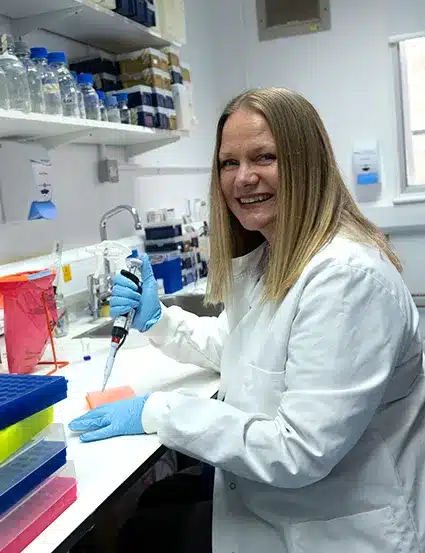

The Canine Genetics Centre – part of the Department of Veterinary Medicine at the University of Cambridge – has been working with James Oliver, head of ophthalmology at Linnaeus-owned DWR Veterinary Specialists, near Cambridge, to research the condition Retinopathy with Vitamin E Deficiency (RVED).
RVED is a disease in which Cocker Spaniels have very low vitamin E levels in their blood, despite this essential nutrient being present at normal amounts in their diet, and researchers wanted to discover why this happens.
James collaborated with the Canine Genetics Centre to design the study, recruit cases and collect samples, enabling researchers to analyse data gathered from a clinical setting.
As a result of their low vitamin E levels, affected dogs will go on to develop retinal degeneration from around four years of age which, if untreated, leads to blindness.
Some dogs may also become wobbly on their feet or develop seizures, which can result in them being put to sleep.
The team’s research efforts have led to an understanding of the cause of the condition which means it is now possible to identify dogs affected with RVED with a simple DNA test even before they become affected.
This means that treatment can be started before retinal degeneration and visual impairments develop.
If a young dog is found to have the disease, they can be given oral vitamin E supplements to normalise levels of vitamin E in their blood which, if started early enough, can prevent retinal degeneration and loss of sight.
Cathryn Mellersh, Senior Research Associate at the Canine Genetics Centre, said: “The team strongly suspected a genetic cause and has been trying to discover the responsible gene for several years with the help of owners and vets, who have contributed DNA samples.
“Thanks to updated information on the canine genome – the dog’s DNA make-up – Katherine Stanbury, one of our research associates, found a mutation in the alpha tocopherol transfer protein gene which is causative of the disease.
“This gene is responsible for getting vitamin E into the blood stream. We now know that RVED is a recessive disease, meaning that affected dogs must have two copies of the faulty gene to develop low vitamin E levels and retinal degeneration.”
The team’s DNA test can be used by dog breeders to find out if dogs carry the gene mutation, so they can avoid matings which result in affected puppies being born.
Cathryn said: “This DNA test is a rare example of one which not only can be used to identify dogs that are carrying the mutation and thus reduce the frequency of the mutation in future generations, but also has the incredible benefit of providing a sight-saving treatment option for dogs with the disease.
“From the research we have done we estimate that there could be several hundred Cocker Spaniels alive today that have two copies of this mutation, whose eyesight could be saved by this test.”
Since the breakthrough findings, animal eye expert and vet James Oliver has presented the research to the European College of Veterinary Ophthalmologists in Amsterdam.
James said: “The research received a lot of interest from the veterinary ophthalmologists who I presented it to, and it has now been published so that more vets can become aware of the findings.
“It’s exciting to think the work which has gone into this project could now mean that Cocker Spaniels who would have lost their sight due to RVED can now be prevented from going blind.”
A DNA test for the mutation that causes RVED is available from Canine Genetics Testing, which operates alongside researchers from the Canine Genetics Centre. All profits are used to investigate other serious, debilitating and blinding diseases in dogs. To find out more, visit www.cagt.co.uk.
The team’s RVED research can be viewed at https://academic.oup.com/g3journal/advance-article/doi/10.1093/g3journal/jkaf016/7985679?searchresult=1
DWR Veterinary Specialists, which is part of Linnaeus, offers specialist-led care in anaesthesia and analgesia, dentistry, cardiology, dermatology, diagnostic imaging, diagnostic pathology, emergency and critical care, internal medicine, interventional radiology, neurology and neurosurgery, oncology, ophthalmology, oral and maxillofacial surgery, orthopaedics, physiotherapy and soft tissue surgery.