
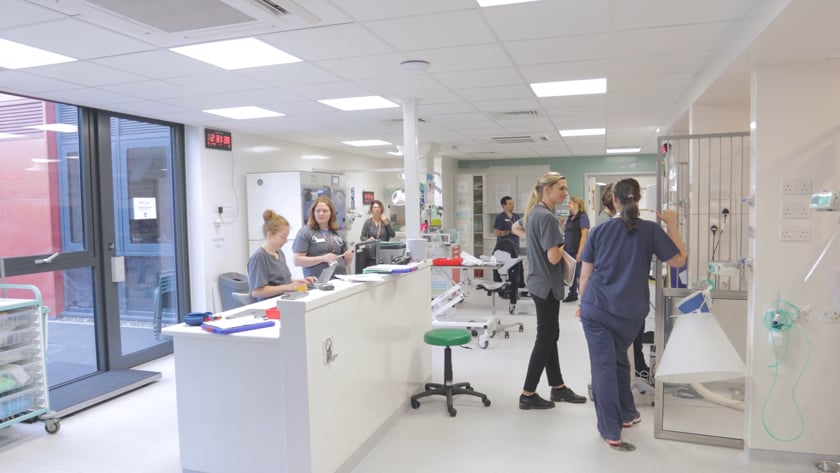
DWR offers outstanding levels of clinical care in state-of-the-art facilities and has nursing teams who dedicated, highly trained and proud of the care they give to our patients.
Veterinary Nurses, Technicians and PCAs
At DWR we have a large team of Registered Veterinary Nurses (RVNs), Student Veterinary Nurses (SVNs), Patient Care Assistants (PCAs) and Technicians, all working together to provide the best care possible to our patients.
The roles and responsibilities across the team are varied and being a multidisciplinary hospital most of our RVNs and PCAs work across all disciplines but some are specialised and have chosen to work in a dedicated disciplinary area, allowing them to develop the required skills to a high standard and learn in a department that they are particularly passionate about, such as Neurology, Internal Medicine or Theatre. To learn more about each service please click here.
A lot of the brilliant work that our nursing team does goes on quietly behind the scenes, they might not be the first face clients see when they arrive on site but their hard work and skill set are essential to allow us to continue to provide world class veterinary care by supporting the veterinary surgeons, aiding them to complete their specialist work.
Key aspects of the roles; (These descriptions are not exhaustive but provide some insight)
RVNs: Look after all aspects of inpatient care including their basic needs and veterinary interventions, care of critically unwell patients, bandaging and wound care, monitoring of vital signs, advanced nursing procedures, monitoring of anaesthesia, supporting patients through diagnostic and surgical procedures. Did you know that RVNs are not vets in training but are professionals in their own right?
SVNs: Are enrolled in formal training to become an RVN, the training is thorough and takes approximately three years to complete, combining a mixture of theoretical and practical skills, with written, oral and practical exams and written assignments. Interestingly most of our SVNs started working at DWR as PCAs before embarking on the next step of their career.
PCAs/Technicians: Provide daily care for all patients at DWR to meet their basic needs, providing one-to-one attention and care to patients as required and enriching their stay at DWR. Supporting patients during veterinary procedures and assisting the vets and nurses with tasks. Housekeeping of clinical areas, maintaining equipment and ensuring that infection control protocols are adhered to.
Career progression
We are committed to the career progression and continuing development and all of our nurses and nursing assistants. We hold many CPD events as well as webinars and the opportunity to have tours of our hospital and shadowing experiences with our referral nurses.
To enquire about shadowing please visit this page.
Our Night Nursing team
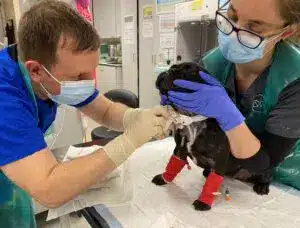
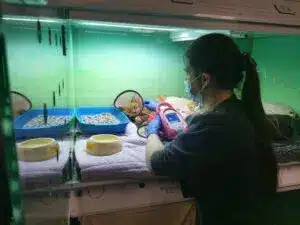
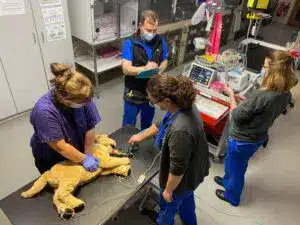
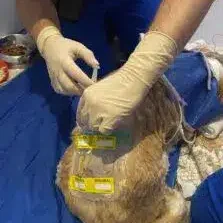
At DWR our day care continues at night, so nurses get the experience of a varied caseload rotating through wards and developing their skills on a night shift in a very close-knit team.
Working as a night nurse offers further benefits in terms of flexibility and a work-life balance such as caring for children, and with longer periods off between shifts it gives you the chance to study or have leisure time in the day. Not having to go part-time to fit in childcare for example also ensures you get a full-time generous salary.
Details of our Night Nursing team
At DWR our night shift times tend to run from 6.30pm until 6.30am. An example of a full-time shift pattern of 37.5 hours a week could be 4 shifts in every 9-day period, meaning 5 days off in a row. We are very flexible to suits an individual’s needs.
The night team consists of our nursing team, our PCA team and our team of rotating Interns (vets – training to be specialists).
On any given night we will generally have 8/9 nurses, 7 PCA’s and a rotating intern looking after our inpatients (Our ICU (Intensive Care Unit) is staffed by its own Intern who stays and works alongside the nurses until midnight (or longer should there be a case requiring mechanical ventilation or post cardiac surgery).
At DWR we pride ourselves on the high level of care that we provide our patients not ending when everybody goes home but continuing 24/7 for the duration of the patients stay with us. As night nurses, their job is solely ward based with shifts spent entirely caring for the patients spending the night with us.
Our wards are divided by service, meaning we have a Surgical ward, a Medical ward, a Neurology ward, an Ophthalmology ward, a cat ward and our ICU. Each nurse is assigned a ward for their block of shifts which really allows them to get to know the patients they are caring for and monitor changes in their condition from day to day.
Why nights? Why do we choose to come to work when everybody else is going home and winding down for the day?
Gone are the days when nights were worked as part of a rotating shift pattern and the least favourite of them all. The night shift is a viable alternative to a full-time day job, offering exactly the same benefits as to those working a conventional day shift as well as a competitive full-time salary.
Critical care nursing at night
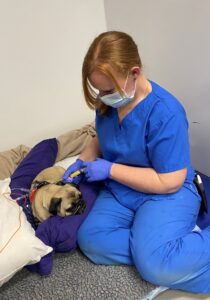
Post-operative overnight care is where our highly skilled team of night Registered Veterinary Nurses (RVN’s) come into play, taking over from the day team in the care of these very vulnerable patients until the next morning.
Only a handful of our nurses are trained to deal with these patients making them invaluable in the patient’s recovery. This includes maintaining their chest drains and central lines, monitoring their vitals to ensure any issues are picked up immediately and regular sampling of their blood and urine The first 24 hours post-surgery is an extremely crucial and labour-intensive time and requires constant one-to-one care. It is imperative that the nurses caring for these patients know the ins and outs of their patient’s condition so that any changes can be picked up as they happen.
Providing constant first-class care to these patients wouldn’t be possible without our team of dedicated night staff. Supported by one of our Emergency & Critical Care (ECC) vet Residents, the night team take over the care of the patient from 6.30pm and stay by their side until 6.30am. By having only one patient in this initial post operative period at a time means that the staff can give them their undivided attention and feedback any issues immediately.